Digital Smell AKA Smell-o-vision
You’re walking through the bustling market streets of a foreign city, divine smells wafting through the air, mouth watering. Out comes your camera, and you take a few pictures here and there of the stalls and the food to send back to friends and family. The snapshots come out great and you send them straight from your camera. There’s a problem though. Family and Friends receive your photo and just smile because they think it’s an ok photograph. Unlike you, they have not received the full atmosphere. They have merely seen a 2D snapshot in time.
But…what if your holiday pictures were more than just images? What if they could capture scent too? What if you could then send the amazing spice and curry smells with the picture? On the other side, your family opens the picture on their mobile, their computer or their tablet, and the extraordinary smell fills the air around them. Extraordinary and truly immersive.


Approximately three-quarters of our emotions are affected by smell. That means smell is a crucial part in our everyday lives, makings us grumpy, happy, sad, panicked…
The question is, is it really possible to trade and send smells electronically? For example, could you really just simply download perfume or deodorant straight off the Internet?
Yes….and here’s why:
What are Smells?
We perceive smells and odours. Anything that we can perceive to smell is called an Odorant, made up of a chemical compound. In other words, whatever is giving off the scent is releasing very light, and volatile (i.e. easily evaporating) molecules that are carried through the air to your nose. All chemical compounds have slightly different smells. Examples include, “Octyl Acetate” which can create an odour that smells like an Orange while Nerolidol creates a scent much like fresh bark.
How do we detect smells?
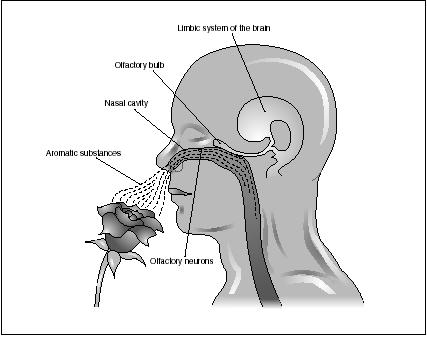
The term for detecting smells is Olfaction. Now naturally, just like touch or taste or any other sense for that matter, special cells known as sensory cells are required to detect these odours. These cells are found in their greatest quantity at the back of the nose in a large air space called the Nasal Cavity.
These are the cells responsible to send messages to the brain when molecules of an odour are detected. Unfortunately, as of yet, there is still no completely accurately proven theory as to how these cells decide and perceive the smell of the molecules. Many theories exist though. It is considered the brain could have a chemotopic map to identify and code chemical compounds once the molecules have been broken down into their individual components.
What does this mean?
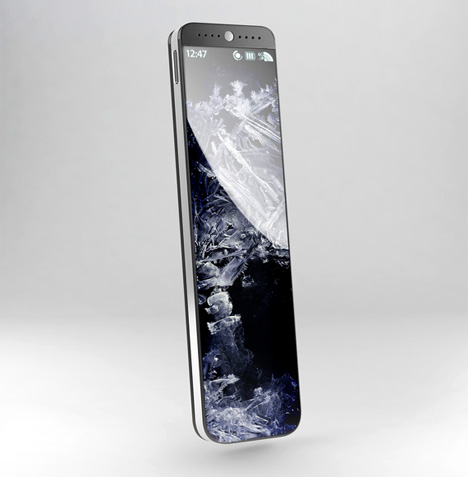
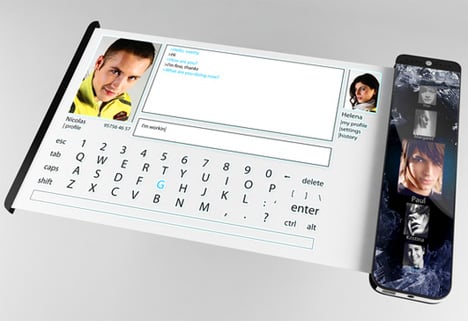
Enough about that. Here’s the problem now. Any technologically advanced device wishing to enable trading and sending of smells electronically should be able to understand chemical compounds and perceive smells. If we don’t know how the brain does it exactly, how can we create a device that can detect and produce any smells. We would otherwise need hundreds and hundreds of different cartridges full of different aromas and fragrances, just like this SMELLIT concept demonstrates.

This therefore severely limits our current ability to produce such a technology.
However, there are ways we can currently push this technology forwards even without fully knowing how the brain understands smells. For example, Takamichi Nakamoto has designed the Odour Recorder, which detects a smell such as that of an apple and then mixes chemicals and releases the resulting compound to try and mimic the smell exactly. This is one step closer in terms of improving our grounds in digital scent.

Digital Scent – The Successes and the (mostly) Failures
We have already used scents to enhance film, images and music for many decades. In fact, some believe it was even used over a century ago. In 1929, throughout a showing of a production called “The Broadway Melody” in the theatres in New York, a perfume was sprayed from the ceiling. Similar actions were used throughout the 1930s and 40s though it was discovered that removing the smells took a lot longer than expected and could end up sticking to furniture too. A further problem was identified. How could you spread the smell to everyone watching a film or theatre production in enough of a quantity for people to notice? It was possible but also meant that the smell lingered in the air for so long that when the next smell was released, viewers were confused because of the multiple smells.
Other attempts at bringing smell to the cinema failed because no-one was really interested and costs were simply too high to equip all seats with devices to release the smells. Many people could not smell the scents once again around the cinema and an annoying hissing noise was present when smells were released which detracted from the viewing too. People with colds were not benefiting either. Such films include ‘The Scent of Mystery’ and the more successful travelogue film of China, ‘AromaRama’.
Smell-o-vision in the cinema was named one of the worst ideas of all time in a 2000 survey. Shame.
But then the real research came along.

Before any successes a lot more attempts were still made to try and create a method of combing smell with other media. DigiScents tried out an idea in 2000 called iSmell which was a device that connected to the computer with a USB. They even created a second version for Mac too. It contained a cartridge with 128 odours that could emit a smell when an e-mail was opened or website visited for example. It had thousands of common odours all encoded into small digitalised files.
Sadly, it got named one of the worst Tech Products of all time. The company went bankrupt.
Still not looking great for smell, is it?
TriSenx developed a concept and idea called the ‘Scent Dome’ which aimed at releasing up to 60 different distinct smells. It could release smells linked to an e-mail. Once again, a failure.

Other experiments, mainly in Japan, intended to investigate if scent creation would enhance user experiences on the computer. Again, they failed to an extent. The technologies just didn’t create a nice immersive experience.
Here is one idea that may prove there still could be a future for smell-o-vision:
Scentcom among other companies are still hard at work trying to revolutionise this technology and one day they may just do it. Let’s see though, what can we expect from the future of this technology:
The Future of Digital Scent:
Ok, so things may start to be turning around. Japanese researchers reckon they can get digital smell to every Tv set by 2020. I believe now, without a shadow of a doubt, that will be possible. Here is more evidence that progress is being made too:
TV
When watching films or normal tv, particular sounds or clips could be combined with smell so that the appropriate scents are released from a small speaker-like device on or next to the TV. This could really enhance viewing. You could smell the frying and baking of food on a cooking show or smell the smoke of an evil villain’s cigar.
Gaming and PC

ScentScape is a very recent product which could really bring digital scent to homes. It promises to add a more immersive experience to gaming and films. Once again, it connects via USB and contains a cartridge with 20 basic scents. 200 hours of heavy use at least it claims each cartridge lasts. And then new cartridges can be purchased. Just like a printer. ScentEditor enables users to create home videos with scents added which are then played through ScentScape. Furthermore, there is a SDK with it which means that professional programmers can code in C++ to create new applications that can be used with ScentScape. This is the first true move into the future of digital scent. A short, unclear, clip of it can be seen in its working state here:
Oceans and forest smells could be released for example would could be quite a spectacular experience.
It could greatly enhance virtual reality games too, providing gameplay that would actually make you feel much more like you are part of the game.
Education
Students could potentially learn words and phrases faster if a smell was associated with them. For example, an orange could be shown with its associated smell to a student and they would remember the smell and the image together as being an “Orange”.

Scent Marketing
Advertisers could create posters which release specific smells or ensure that their store promotions or internet adverts have an associated smell attached to them. For example, a fastfood company advertising chips and burgers could ensure that all their adverts release real (although they’d probably be modified) smells of their foods to entice people to go and purchase from them.
Cameras
Capture a holiday scene and send it to your PC. You could also send it to portable devices if these devices contained small enough cartridges of smells or if they were then connected up to PCs and digital smell devices themselves.
Everyday situations:
You could have scent cartridges in clothes so that if your SMART clothing senses that you are in a bad mood, the relaxing aromas will be emitted from small button sized holes.
Relaxing aromas can also be emitted in vehicles to keep people happy and perhaps smells to keep people awake and alert on the roads too.
Could be used in Medical research to help catch signs of Neuro-degeneration early.
There’s so many possibilities…it’s just how long it takes to make them possible. I think it could be in the next five years that the massive growth of Digital Smell Devices happen!
Read more: